What made a person a person in ancient Egypt? The answer was much more complicated than simply having a body and a soul.
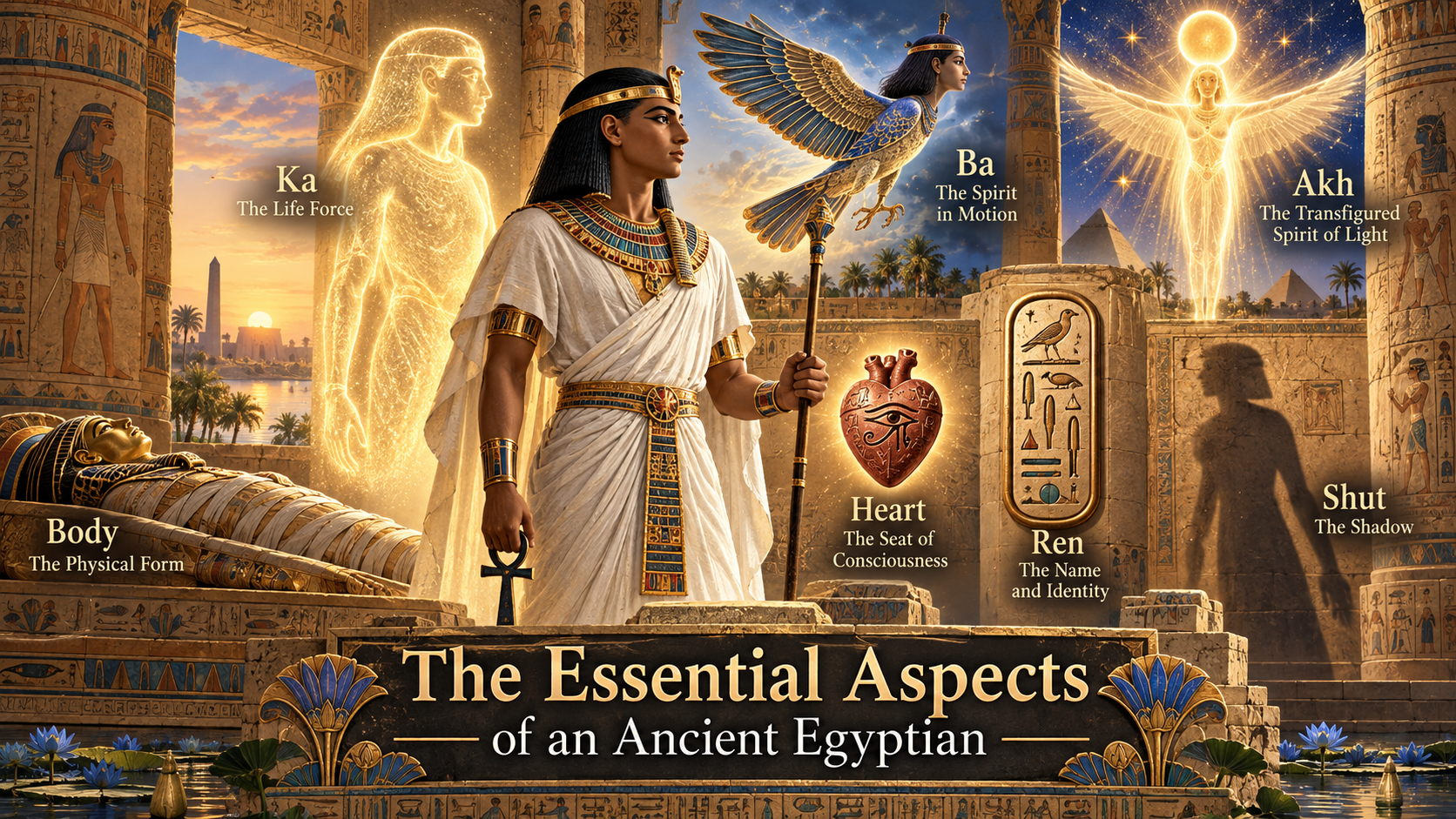
Ancient Egyptians understood a human being as a collection of interconnected physical and spiritual aspects. A person had a body, but also a Ka, a Ba, a heart, a name, a shadow, and other elements that together created a complete individual. Death could separate these different aspects, which helps explain why Egyptian funerary religion placed so much importance on preserving the body, speaking the name of the deceased, providing food offerings, protecting the heart, and performing rituals that allowed the dead to become transformed.
The Ka, Ba, and Akh are the best-known parts of the ancient Egyptian concept of the soul, but they were only part of a much larger idea of what constituted a human being. The deceased was seen as possessing physical elements, including the body, name, heart, and shadow, along with the spiritual Ka and Ba. Funerary rituals helped restore relationships among these elements so the deceased could continue to exist.
Modern descriptions sometimes call these the “parts of the ancient Egyptian soul,” but even that phrase can be misleading. Ancient Egyptian thought did not divide a person neatly into a Western-style body on one side and an immortal soul on the other.
The Essential Aspects of an Ancient Egyptian Person
| Aspect | Egyptian Term | Basic Meaning |
|---|---|---|
| Body | Khat/Khet, Sah, and other body terms | The physical and transformed body |
| Ka | kꜣ | Life force or vital essence |
| Ba | bꜣ | Individual manifestation or mobile self |
| Heart | ib or jb | Thought, memory, emotion, and moral identity |
| Name | ren or rn | Personal identity and continued existence |
| Shadow | shut or šwt | An inseparable manifestation of the person |
| Akh | ꜣḫ | The transformed, effective spirit |
| Sah | sꜥḥ | The ritually transformed or mummified body |
Do not imagine these as separate objects stored inside the body. Together, they expressed different ways in which an individual existed, acted, remained identifiable, and could continue to exist after death.
The Ka: The Life Force
The Ka, written kꜣ, was one of the most important aspects of an ancient Egyptian person. It is commonly translated as the life force, vital essence, or sometimes the double.
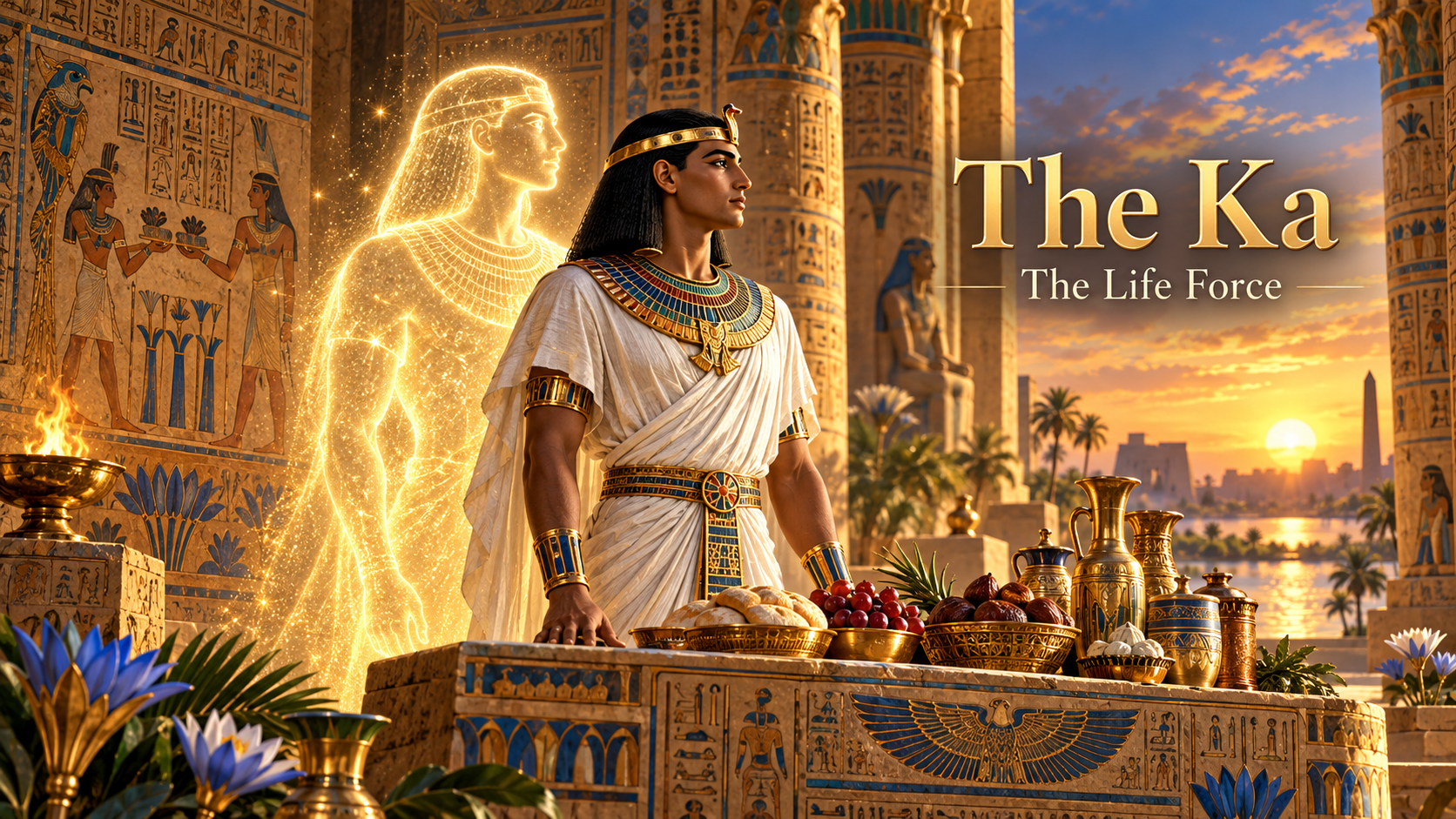
The Ka was what distinguished a living person from a dead body. After death, however, the Ka still required sustenance, which is one reason food and drink offerings became such an important part of Egyptian funerary practice.
Tomb scenes frequently show enormous quantities of bread, beer, meat, vegetables, fruit, and other foods being presented to the deceased. Actual offerings could also be placed within tomb chapels.
The physical food did not have to disappear for the Ka to benefit. Its vital essence could nourish the deceased, while the physical food remained available to the living.
After death, the Ka separated from the body, and the deceased sought to reunite with it. Because food and drink had sustained the Ka during life, offerings continued to sustain it after death.
This helps explain one of the most familiar features of Egyptian tombs: the offering table.
It also explains why statues of the deceased were so important. A statue bearing the individual’s identity could provide another physical focus through which the deceased could receive offerings. The Met notes that the Ka ideally had an image, such as a statue inscribed with the person’s name, within the tomb.
The hieroglyph for the Ka depicts two raised arms: 𓂓
Although it is tempting to think of the Ka as a ghost, that comparison is not quite right. It was closer to the vital principle that made life possible and continued to play a role in maintaining the deceased after death.
The Ba: The Individual and Mobile Self
The Ba, written bꜣ, is frequently translated as “soul,” but this translation does not capture the concept completely.
The Ba represented the individual as a distinct being and could move outside the tomb. In funerary art, it was famously shown as a bird with a human head, often bearing the features of the deceased.
That image illustrates one of the Ba’s most important characteristics: mobility.
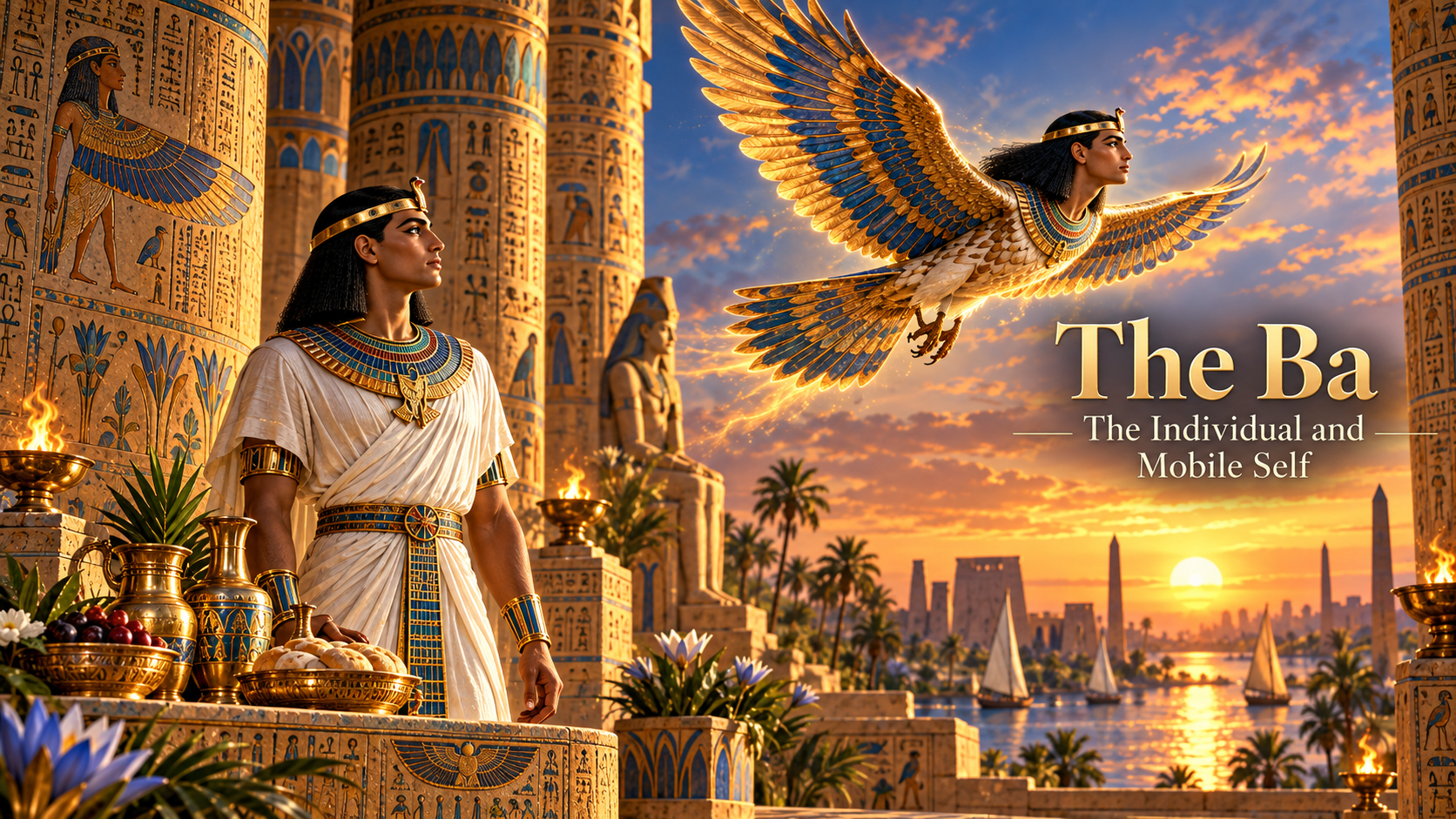
Unlike the preserved body resting within the tomb, the Ba could move between different realms. It could leave the tomb, travel into the world, associate with the gods, and return to the deceased.
The Ba is essentially the individual apart from the physical body and the link between earthly existence and the afterlife. Each night, the Ba was expected to return to the mummy and participate in the cycle of renewal.
This is why descriptions of the Ba simply as “personality” are useful as a starting point but should not be taken too literally. Modern Egyptologists have debated whether the Ba should even be regarded as one component stored within a person, rather than a particular manifestation of the whole individual.
The distinction matters because Egyptian ideas about the self were fluid. A person could exist and act in several forms rather than possessing one detachable soul, as in the modern Western idea.
The Akh: The Transformed Spirit
The Akh, written ꜣḫ, was not simply another soul that existed alongside the Ka and Ba. It represented the deceased after a successful transformation.
The word is often translated as “effective spirit,” “transfigured spirit,” or “effective being.” Through proper burial, ritual, divine judgment, and transformation, the deceased could become an Akh and participate in the divine world.
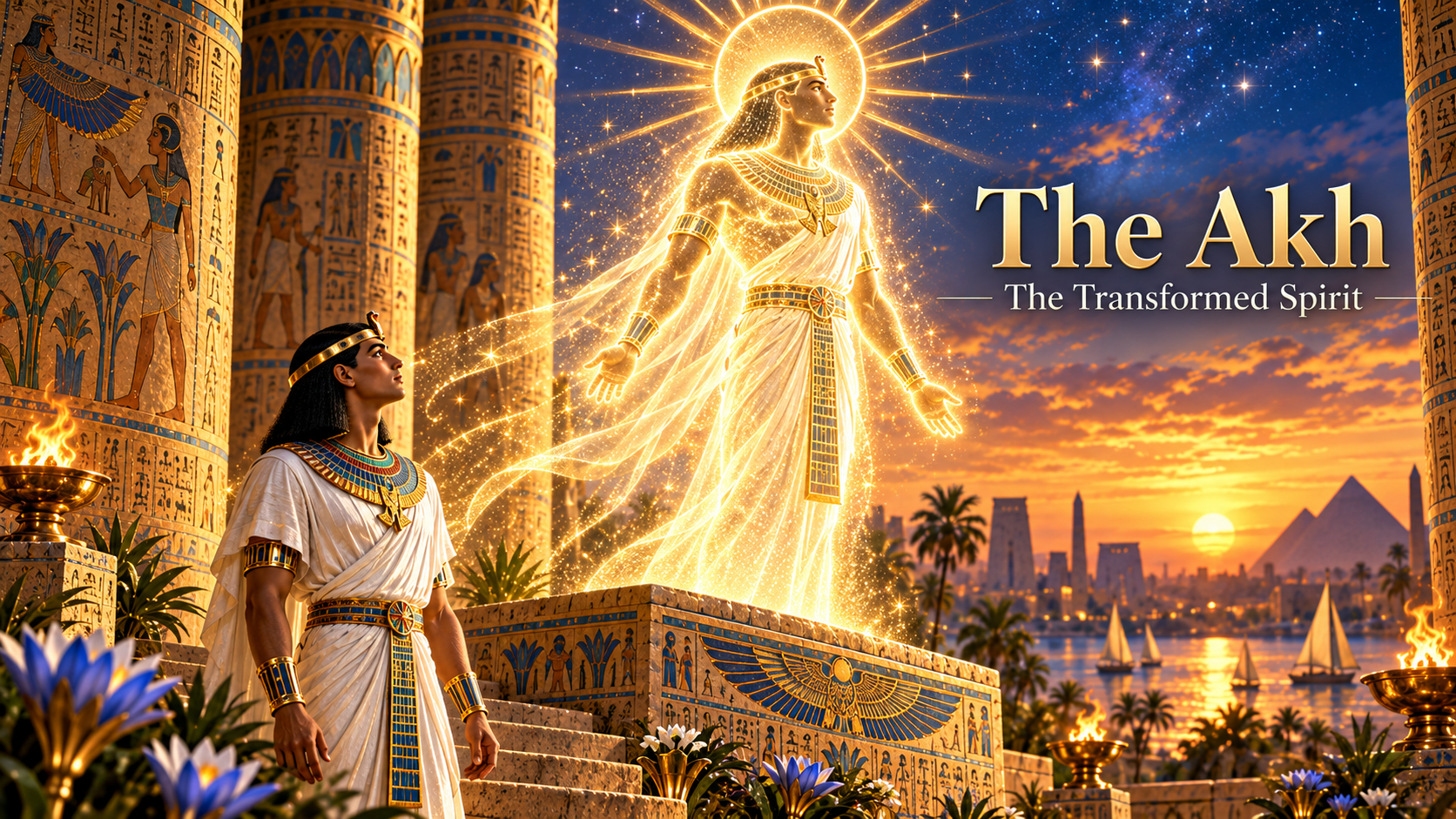
The Met describes the reunion of the Ba with the Ka as resulting in an Akh, an effective being capable of renewed existence. This transformation was associated with the sun’s recurring rebirth: it disappeared into the western horizon each evening and returned at dawn.
Ancient Egyptian funerary texts repeatedly focus on this process of transformation. What we now call the Book of the Dead was known to the Egyptians through expressions associated with “going forth by day,” emphasizing the deceased’s ability to emerge, move, transform, and live again.
Book of the Dead Spell 100, for example, concerns transforming the deceased into an effective spirit. Spell 101 similarly describes making the dead person into an “excellent spirit.”
The Akh therefore makes the most sense as the successful result of transformation, rather than simply the third member of a three-part soul.
The Heart: Ib
For the ancient Egyptians, the heart, or ib (jb in Egyptological transliteration), was much more than an organ that pumped blood.
The heart was closely associated with thought, memory, emotion, character, and moral identity. Functions modern people usually associate with the brain could instead be linked to the heart.
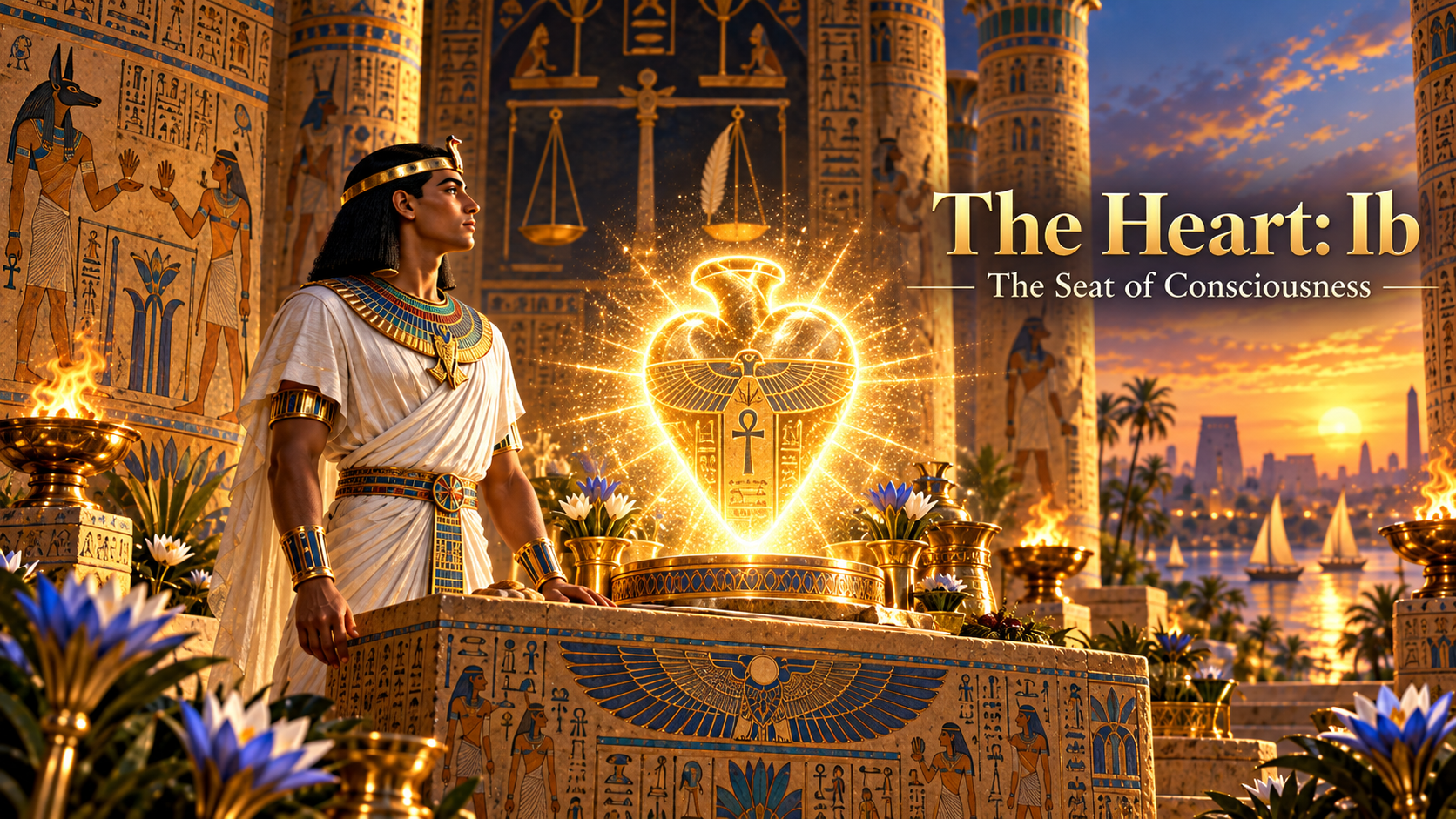
The ib heart expressed both emotion and cognition, while another Egyptian word could refer more specifically to the physical heart, although the terms could overlap.
This explains why the heart played such an important role in Egyptian ideas about death.
During the famous Weighing of the Heart, the deceased’s heart was weighed against the feather associated with Ma’at, the principle of truth, justice, balance, and proper order.
A heart consistent with Ma’at allowed the deceased to proceed toward a blessed afterlife. A person could not simply discard an inconvenient heart before judgment. It was part of who that individual was.
This concern recurs throughout the Book of the Dead. Spells 26 through 30 deal with restoring the heart, preventing it from being removed, or preventing it from opposing its owner in the underworld.
Book of the Dead Spell 30B became especially famous because versions of it were inscribed on heart scarabs placed with mummies. The purpose was to prevent the heart from testifying against its owner during judgment.
The heart was therefore not merely another body part. It contained something fundamental about the person’s identity, memory, actions, and moral character.
The Ren: The Name
To an ancient Egyptian, your name was not simply a convenient label. The Ren, written rn, was part of your identity.
A person’s continued existence was closely tied to the name’s survival. This helps explain why tombs, statues, coffins, stelae, and offering formulas repeatedly preserved the names of the dead.
Whenever someone encountered the inscription and spoke the name, the person’s identity continued to exist within the world of the living.
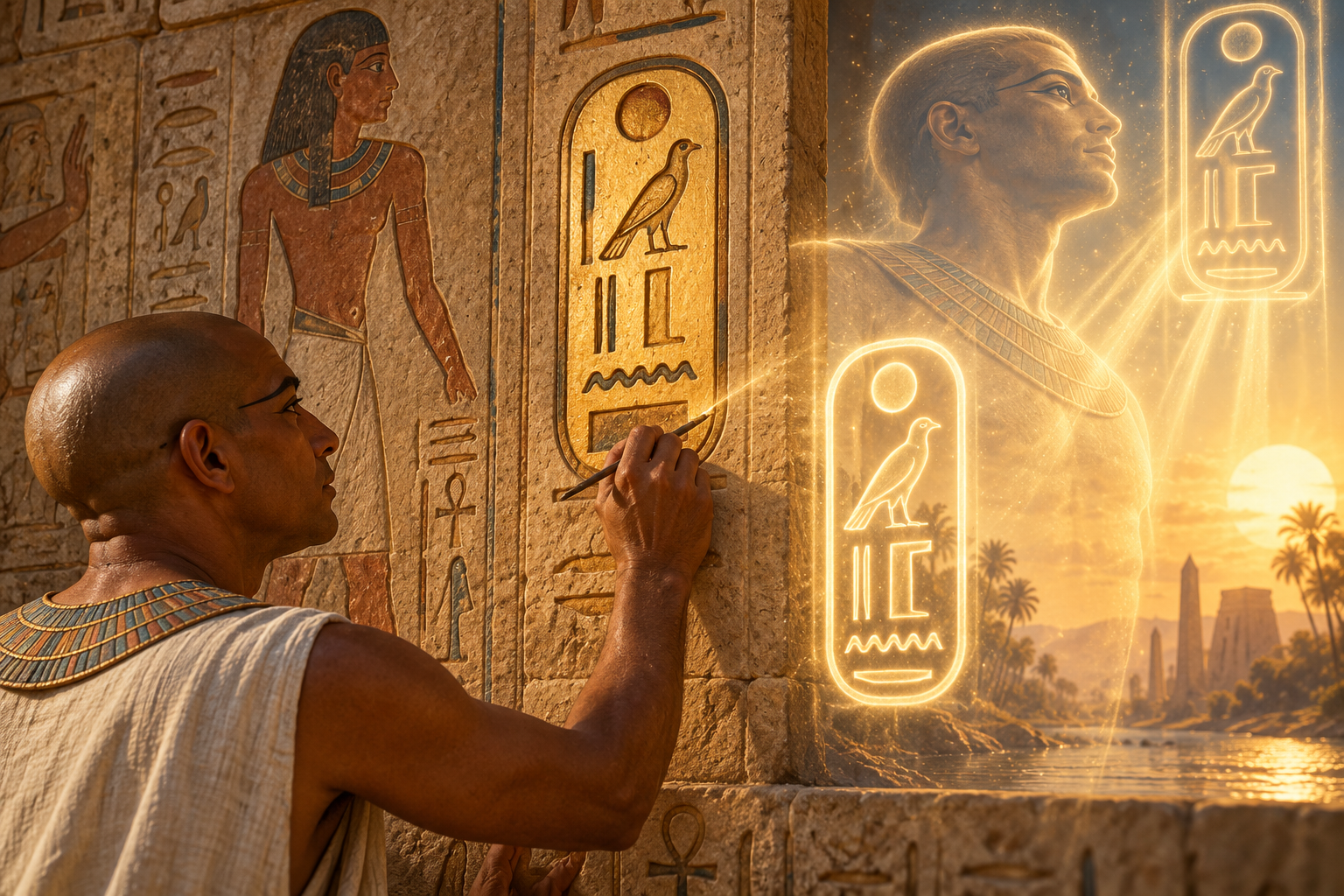
This gives additional meaning to the deliberate destruction of names on Egyptian monuments. Erasing a person’s name could attack that person’s identity and memory, although individual cases of erased inscriptions may have specific political or religious motivations rather than reflecting a universal practice.
Hatshepsut provides a famous example. Decades after her reign, some of her images and names were intentionally removed from monuments.
Identity also appears in funerary literature. The Book of the Dead included spells intended to preserve a person’s mental and personal integrity, including Spell 25, “For giving the memory of a man to him in the underworld.”
Preserving a name meant preserving the person to whom that name belonged.
This also helps explain why Egyptians repeatedly wrote the deceased’s name on coffins, statues, shabtis, stelae, tomb walls, and other funerary objects. Identity had to survive along with the body.
The Shut: The Shadow
The shadow, called šwt and often written in English as Shut, Sheut, or Shuyet, was another aspect of a person. Wherever a living person went beneath the Egyptian sun, the shadow followed.
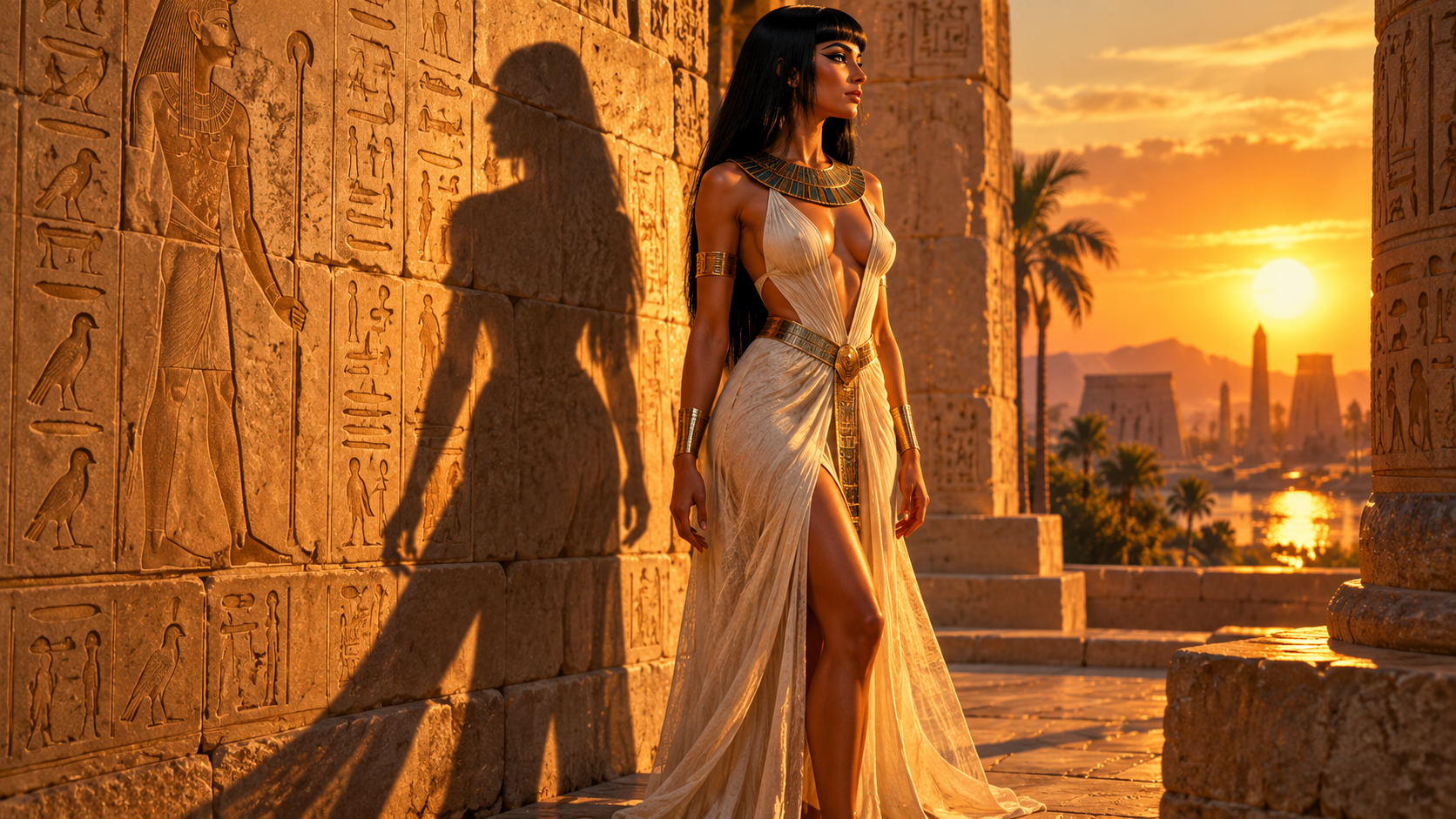
It was physically inseparable from the person yet visibly distinct from the body. That made it a natural expression of presence and identity.
The shadow could therefore be understood as something belonging uniquely to the individual. Egyptological discussions of personhood include the shadow alongside such elements as the name, Ka, heart, and body.
The Egyptian word also carried associations with shade and protection, an especially understandable connection in a civilization shaped by the intense sunlight of the Nile Valley.
Like the name, the shadow demonstrates how different Egyptian ideas about personhood were from a simple body-versus-soul division. Even something as apparently ordinary as the silhouette created by a person’s body could participate in that person’s existence.
The Body
The body was absolutely essential to ancient Egyptian beliefs about the person and the afterlife. This is one reason Egyptian civilization developed such elaborate mummification traditions.
However, describing the body simply as the Khet can create another modern oversimplification.
Egyptian texts used several words for different states or understandings of the body. Egyptologist Christina Riggs notes terms for the physical form, the corpse, and the transformed mummy, showing that there was not necessarily one universal Egyptian concept equivalent to our single word “body.”
In funerary contexts, khat (ẖꜣt) can refer specifically to the corpse, while sah (sꜥḥ) is associated with the mummy or the ritually transformed body.
That distinction is important.
Mummification was not simply an ancient attempt to keep a dead body looking recognizable for as long as possible. The funerary process helped transform the corpse into a new, enduring form suitable for existence beyond death.
Riggs cautions that saying the main purpose of mummification was merely to preserve the physical body can itself be an oversimplification. Embalming, anointing, wrapping, ritual speech, mourning, and rites such as the Opening of the Mouth helped turn the corpse into a transformed, godlike body capable of participating in the afterlife.
That makes the mummy something more than a preserved corpse.
It was a transformed body.
The Sah: The Transformed Body
The Sah, or sꜥḥ, is sometimes described in popular lists as the “spiritual body.” A more cautious description is the ritually transformed or mummified body.
Through embalming and funerary ritual, the dead body could become a Sah. The transformation of the corpse into a mummy was an important step toward attaining the transfigured state associated with the Akh.
This distinction helps connect several practices that might otherwise seem unrelated.
Mummification protected and transformed the body. Tomb rituals sustained the Ka. Funerary texts protected and empowered the Ba. The name preserved identity. The heart retained memory and moral character.
Together, these elements allowed the individual to remain complete.
What About the Sekhem?
You will sometimes encounter lists claiming that the ancient Egyptian soul contained exactly nine parts, including something called the Sekhem.
The Egyptian word sḫm certainly existed and is connected with concepts of power, might, or authority. It is also found in other familiar Egyptian words and names, including the name of the goddess Sekhmet, “the Powerful One.”
What is much less secure is the modern claim that every Egyptian possessed a distinct “Sekhem soul” that formed one member of an official nine-part system.
Ancient Egyptian sources do not present a standardized checklist saying that a human being consisted of exactly nine souls. Modern lists often combine terminology taken from different periods, texts, and scholarly interpretations into a convenient system that is far tidier than the surviving Egyptian evidence.
For that reason, Sekhem is worth mentioning, but I would not put it alongside the Ka, Ba, heart, name, and shadow as though the Egyptians themselves had created a canonical numbered list.
Did Ancient Egyptians Believe in Nine Parts of the Soul?
You will frequently see websites describing the nine parts of the Egyptian soul as Khet, Sah, Ren, Ba, Ka, Ib, Shut, Sekhem, and Akh.
That is a useful modern memory device, but it should not be mistaken for an ancient Egyptian creed.
No surviving Egyptian text presents those concepts as an official list called “the nine parts of the soul.”
In fact, Egyptian sources may have recognized other dimensions of personhood. Concepts including a person’s fate, allotted lifetime, personal magic, name, shadow, Ka, Ba, and heart as dimensions of the complete individual.
Different concepts also became more or less prominent during different periods of Egyptian history.
Rather than imagining an Egyptian person as a container holding nine separate spiritual objects, it is more accurate to imagine a network of identities and forms that had to remain connected.
What Happened to These Parts When Someone Died?
Death threatened the person’s unity. The body could decay. The Ba could leave it. The Ka required nourishment. The heart faced judgment. The name could be forgotten. These elements had to be kept together or restored.
That is why Egyptian funerary customs were so elaborate.
Mummification, coffins, tomb statues, written names, offerings, amulets, funerary spells, heart scarabs, and burial rituals were not random traditions. They addressed different dangers that threatened the continued existence of the deceased.
The Met describes death as a moment when the different components of the person became disassociated. Funerary rituals were designed to reunite them so that the dead individual could live again.
This makes the Egyptian tomb easier to understand. It was not simply a storage place for a corpse. It was part of a system designed to keep a person alive forever.
Ka vs. Ba vs. Akh: What Is the Difference?
People often confuse the three terms because they all relate to spiritual existence. The simplest distinction is this:
| Concept | Best Short Explanation |
|---|---|
| Ka | The life force that required nourishment |
| Ba | The mobile manifestation of the individual |
| Akh | The successfully transformed and effective deceased |
The Ka could receive offerings. The Ba could move between realms and return to the body. The Akh represented the dead individual after successful transformation.
That is why saying that the ancient Egyptians had “three souls” does not quite work.
These concepts describe different aspects and states of human existence, rather than three interchangeable ghosts living inside one body.
A Person Had to Remain Whole
One idea connects nearly every aspect of Egyptian funerary belief: completeness.
The body had to remain intact or be ritually restored. The heart had to remain with its owner. The name had to survive. The Ka needed nourishment. The Ba needed freedom of movement and the ability to return. Funerary rites helped the deceased achieve the transformed condition of an Akh.
Egyptian texts repeatedly emphasize restoring things that had been separated and making the deceased whole again. The same principle appears in one of Egypt’s most important myths, in which Isis restores Osiris’s dismembered body so transformation and renewed life become possible.
The goal was not merely to preserve a corpse. The goal was to preserve the person.
The Ancient Egyptian Idea of the Soul Was Really an Idea of the Self
Calling the Ka, Ba, and Akh “parts of the soul” can help modern readers begin to understand them, but the phrase ultimately says more about our categories than Egyptian ones.
An ancient Egyptian individual existed physically, spiritually, socially, magically, and even through memory.
- Your body was you.
- Your heart was you.
- Your name was you.
- Your shadow was you.
- Your Ka and Ba were also expressions of you.
And if death, ritual, judgment, and transformation proceeded successfully, you could become an Akh, an effective and transformed being capable of continuing to exist among the gods and the blessed dead.
For the ancient Egyptians, eternal life therefore depended on far more than simply possessing an immortal soul. It depended on keeping every essential aspect of the person from disappearing.
