Have you ever wondered what your name would look like in ancient Egyptian hieroglyphs? This ancient Egyptian name translator provides a phonetic translation (transliteration).
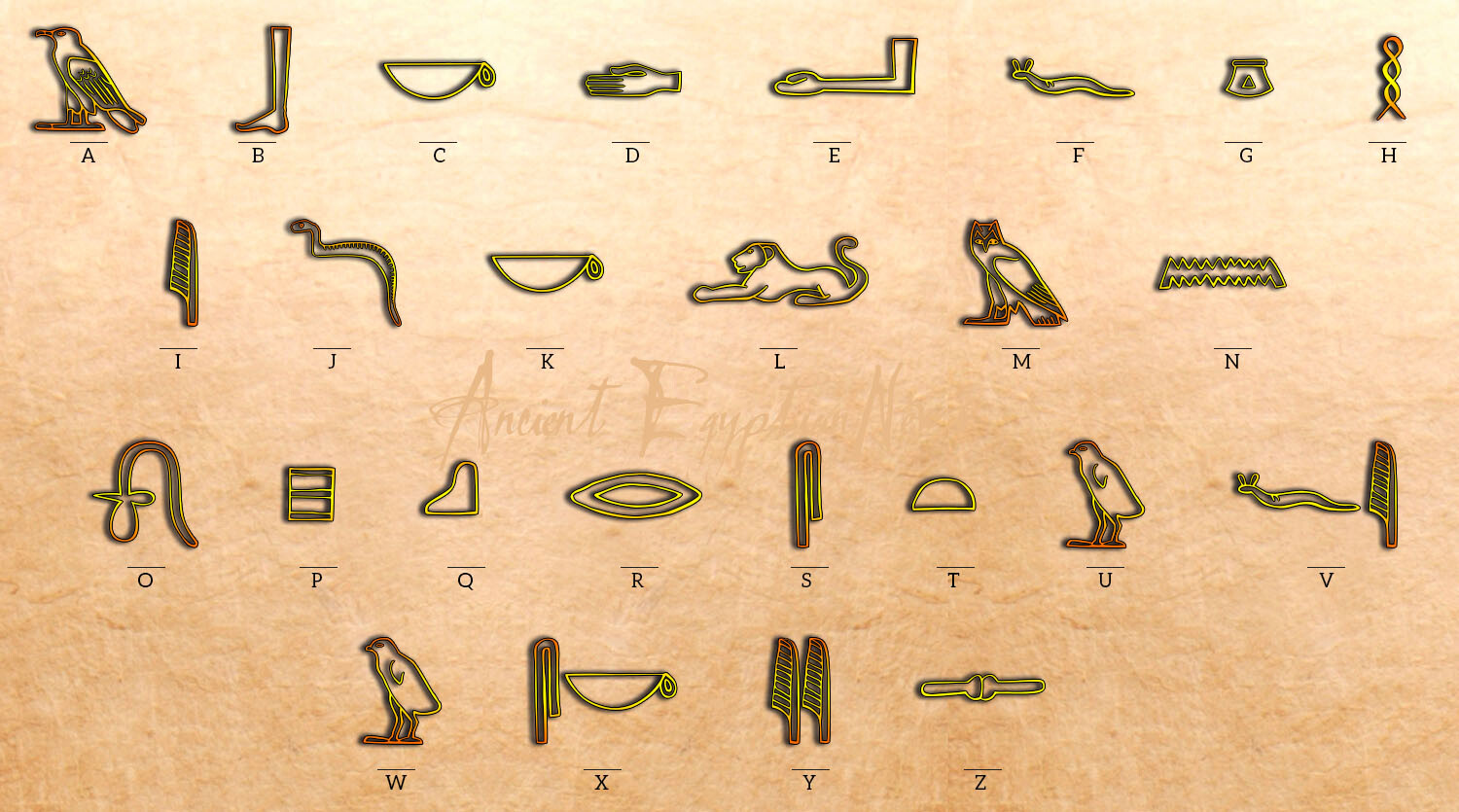
The Egyptian “alphabet” was never official, but amongst the many hieroglyphic symbols, there were about 24 different symbols that represented simple vocal sounds and which were used very much like the letters of the English alphabet.
Each of these 24 characters are called “unilaterals” – “uni” coming from the fact that they represent a single sound. Another important note is that punctuation wasn’t a thing in ancient Egyptian times. So if your name includes a ‘ you’ll have to add that in yourself.
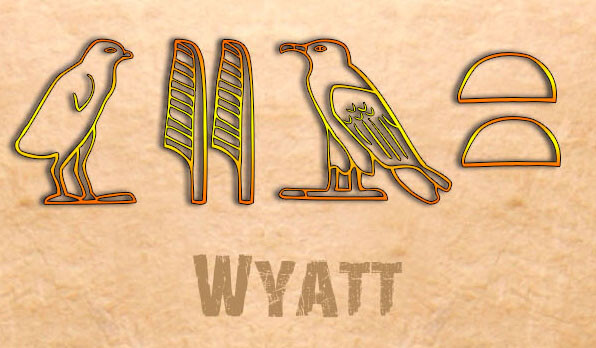
Here are a few sample English names spelled out in hieroglyphs.
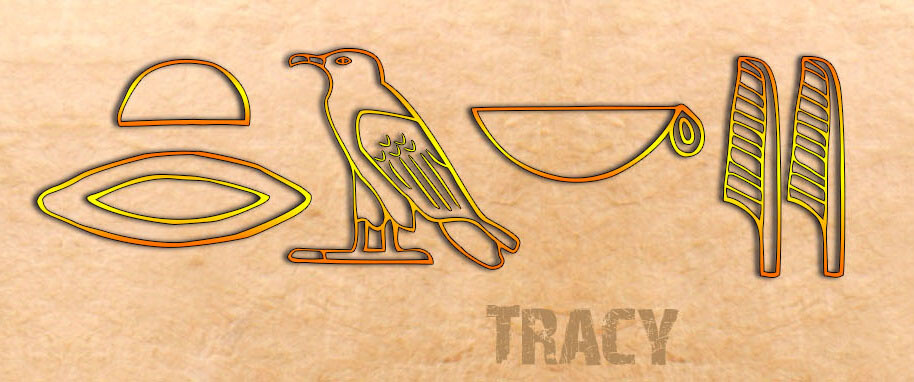
Sometimes when you have smaller symbols, you can stack them on top of each other. It helps to make them look more visually appealing.
See? Works the same for Adrian. The A is large so it stands off on its own, but then you can stack the d and r on top of each other.
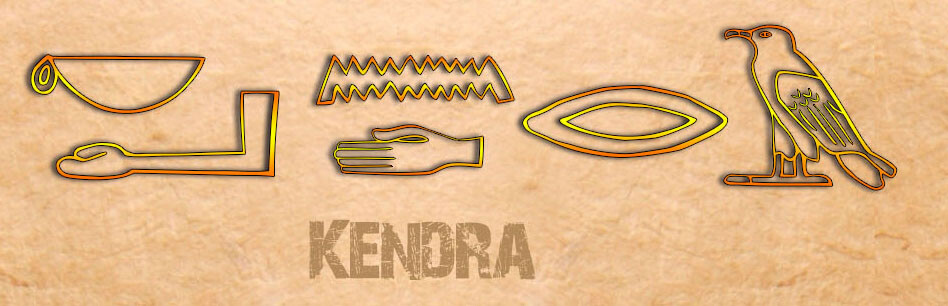
Let’s look at the name Kendra. Here it is all spelled out, each letter in a single row.
It looks nice, but it takes up a lot of space. Now let’s arrange the hieroglyphs in a way that doesn’t take up so much space, for just a single name.
Here are some additional popular names. As you can see, some of them are easy to arrange, and some you have to just fit the letters in side by side.
Want to translate your own name? Click here to check out our Ancient Egyptian Names Translator!
Hieroglyph Alphabet
The ancient Egyptians didn’t use an alphabet identical to the modern English alphabet. Their writing system contained hundreds of signs, including symbols representing complete words, groups of consonants, individual consonant sounds, and determinatives that clarified a word’s meaning.
However, Egyptian hieroglyphic writing did include a group of signs known as uniliteral signs, each representing a single consonant. These are sometimes called the Egyptian hieroglyph alphabet because they’re the closest ancient Egyptian equivalent to alphabetic letters.
The A-to-Z list below is a modern phonetic adaptation designed for writing English names and words with Egyptian-style symbols. Some English letters, especially vowels and sounds such as C, L, V, and X, didn’t have exact ancient Egyptian equivalents. In those cases, the closest available sound or a combination of signs is used.
Unicode allows these hieroglyphs to appear as digital characters that can be copied and pasted, although their appearance may vary according to the font, browser, and device being used. Egyptian hieroglyphs could function as phonetic signs, word signs, or classifiers depending on their context.
Egyptian Hieroglyph Alphabet A to Z
| English letter | Hieroglyph | Copy and paste | Approximate Egyptian sound or sign |
|---|---|---|---|
| A | Vulture | 𓄿 | ꜣ, commonly simplified as A |
| B | Foot | 𓃀 | B |
| C | Basket or folded cloth | 𓎡 / 𓋴 | K for hard C, S for soft C |
| D | Hand | 𓂧 | D |
| E | Reed leaf | 𓇋 | I or Y, used here for E |
| F | Horned viper | 𓆑 | F |
| G | Jar stand | 𓎼 | G |
| H | Reed shelter | 𓉔 | H |
| I | Reed leaf | 𓇋 | I or Y |
| J | Cobra | 𓆓 | Ḏ, approximated as J |
| K | Basket with handle | 𓎡 | K |
| L | Lion | 𓃭 | Often used for L in modern adaptations |
| M | Owl | 𓅓 | M |
| N | Water ripple | 𓈖 | N |
| O | Quail chick | 𓅱 | W or U, used here for O |
| P | Reed mat or stool | 𓊪 | P |
| Q | Hillside | 𓈎 | Q or deep K |
| R | Mouth | 𓂋 | R |
| S | Folded cloth | 𓋴 | S |
| T | Bread loaf | 𓏏 | T |
| U | Quail chick | 𓅱 | W or U |
| V | Horned viper | 𓆑 | F, the closest common substitute for V |
| W | Quail chick | 𓅱 | W |
| X | Basket and folded cloth | 𓎡𓋴 | K and S together |
| Y | Two reed leaves | 𓇌 | Y |
| Z | Door bolt | 𓊃 | Z or S |
𓄿 𓃀 𓎡 𓂧 𓇋 𓆑 𓎼 𓉔 𓇋 𓆓 𓎡 𓃭 𓅓 𓈖 𓅱 𓊪 𓈎 𓂋 𓋴 𓏏 𓅱 𓆑 𓅱 𓎡𓋴 𓇌 𓊃
Was There a Real Egyptian Hieroglyph Alphabet?
There was no ancient Egyptian alphabet containing the same 26 letters used in modern English. Egyptian writing didn’t normally record vowels, so letters such as A, E, I, O, and U can’t be converted directly into hieroglyphs. Signs that represented consonants or semivowels are often used in their place when writing modern names.
Hieroglyphic writing was also more complex than simply placing one symbol after another. A word could include a sign representing two or three consonants, additional signs reinforcing its pronunciation, and an unspoken determinative explaining whether the word referred to a person, place, action, animal, object, or abstract concept.
For this reason, spelling an English name with the chart above creates a decorative phonetic rendering rather than a historically exact translation into the ancient Egyptian language.
How to Write Your Name in Hieroglyphs
To write a modern name using the chart, spell it according to how it sounds rather than automatically replacing every English letter.
For example, the name Jack could be represented approximately as:
J + A + K
𓆓𓄿𓎡
The name Sarah could be represented as:
S + A + R + A
𓋴𓄿𓂋𓄿
Because vowels generally weren’t written in ancient Egyptian, a more historically inspired version might omit some vowel signs. The best rendering depends on the pronunciation of the name and the period of Egyptian history being imitated.
If you want to see more of the hieroglyphs in Unicode, you can do so here.
Want to see what your own name looks like? Check out our ancient Egyptian name translator.
